
There’s a version of this business where one would chase everything. Every RFP that comes out, every project that looks remotely relevant, every utility that might conceivably need what you sell. All of these reveal something and hence you go after it ruthlessly. The logic seems reasonable; you get more shots, more chances and cast a wide net.
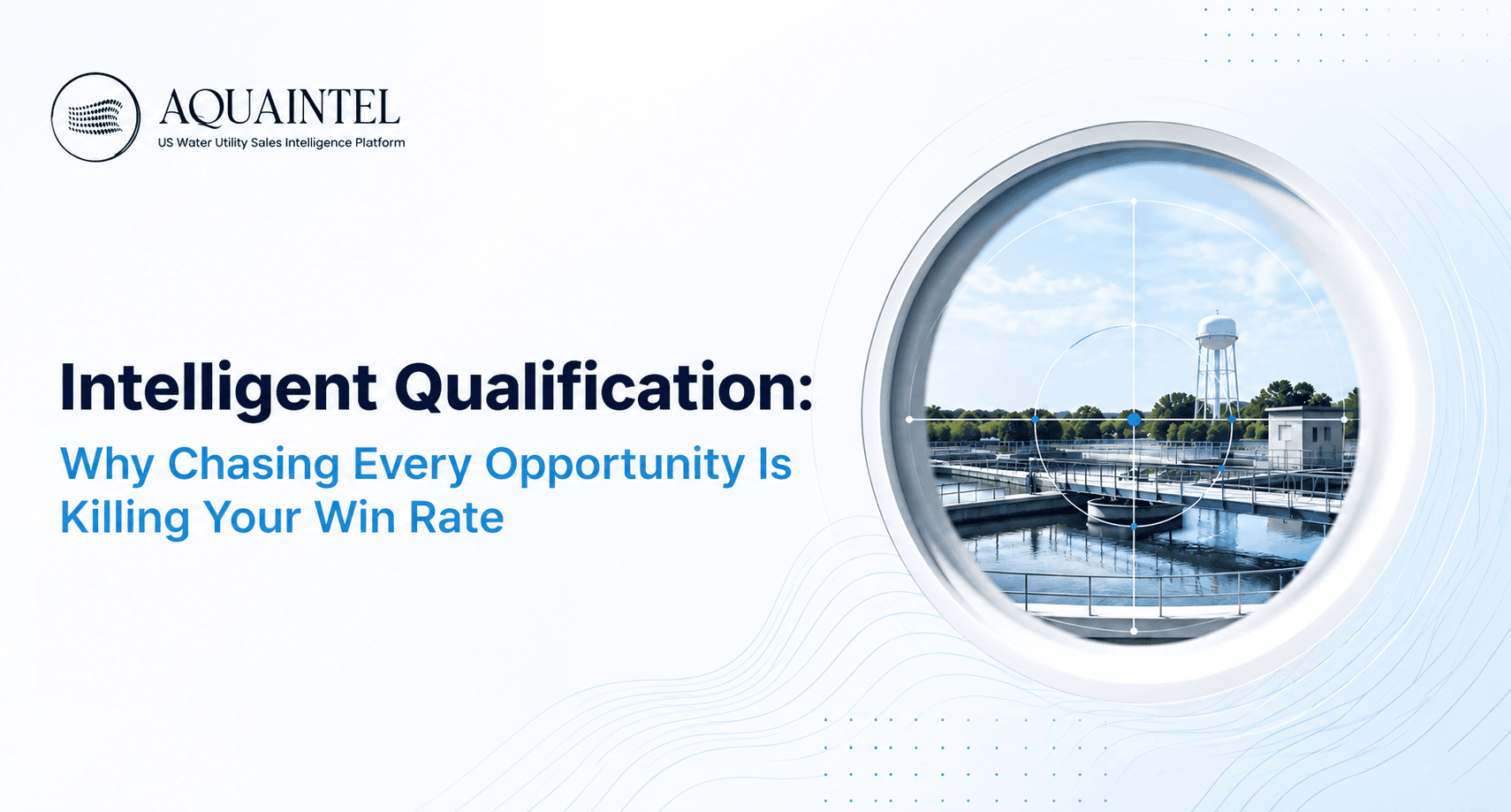
The reality is quite the opposite. Predictive intelligence for water utility sales requires qualification before pursuit otherwise it fills your pipeline with low-probability pursuits, and produces a win rate that makes no sense given the effort going in.
In the water sector, this problem is remarkably acute. There are long sales cycles, complex deals, multiple stakeholders, and formal procurement processes that can stretch for months. When you invest that kind of time and resource into a deal you were never going to secure, the cost ends up ranking to enormous levels.
The scale of that waste is well documented; most companies pour roughly 40% of their proposal resources into RFPs they were never going to win, and even a lean proposal effort typically runs 0.2% to 0.5% of contract value in preparation cost alone. That’s real money spent with real conviction, on a decision that in many cases had already gone the other way months earlier.
This is after the direct cost of bid preparation and proposal writing. The opportunity cost of deals you could have won but didn’t pursue properly because your team was busy chasing something that was wired for an incumbent from day one.
The Five Questions Every Opportunity Should Answer
This shift is building a scoring model that objectively evaluates each opportunity against the factors that actually predict success.
- Is this actually the kind of utility we win with? This matters a lot more than what is made known to the public. Does this utility match the profile of utilities where you’ve succeeded before? Variables like size, geography, infrastructure type, procurement history speak a lot about whether your solution is a natural fit or a stretch that is just not realistic.
The stakes of getting this wrong are measurable: public-sector win rates typically run 10–20% depending on competition and project type, compared with roughly 25% average for commercial pursuits meaning a poor-fit public-sector chase starts from worse odds than most vendors realize before they even factor in the incumbent question. - Are we competing against the market or against an incumbent? This also needs to be paid regard to. Try to realise if you are up against an entrenched incumbent with a decade of relationships inside the account or a relatively open field where relationships are there to be built. These are very different situations requiring very different decisions about whether to pursue and you must proceed judiciously.
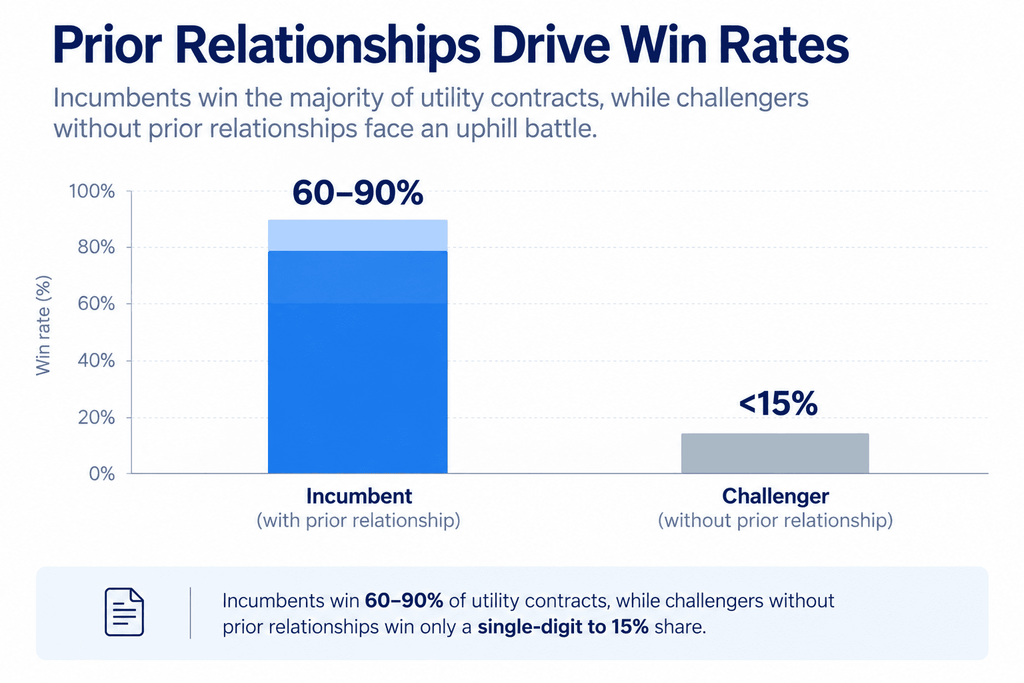
The gap is not small. Incumbent win rates on contract recompetes typically run between 60% and 90%, depending on the relationship and how the current vendor has performed while a challenger going up against an entrenched incumbent often sees single-digit to 15% win rates without a strong pre-RFP relationship of their own. Knowing which fight you’re in before you commit resources isn’t optional, it’s the difference between a real shot and a donation.
- Is this project actually going to happen? A project with solid funding and a defined schedule is a very different opportunity than one still waiting for budget approval. Both of these require widely different approaches with no room for major last minute changes.
- Are we early enough to influence the outcome? Did your early engagement strategy for water utilities begin early enough to add real value? Or did you find out about this project three weeks before the RFP dropped, giving you no time to build relationships or influence specifications? Where you land into a utility and at what time determines a majority of how things are worked on and you must know it on the very first day.
The average win rate across public-sector procurement sits around 45%, but vendors who engage before the solicitation is published push that closer to 60%. Three weeks before the RFP drops aren’t early engagement; it’s arriving after the window that actually determines the outcome has already closed. - What does the data predict? Water utility market intelligence platforms can help weigh dozens of variables ranging from a utility’s past procurement patterns to the presence of internal champions or predicting win probability. Organizations effectively using analytics for sales planning are 1.5x more likely to achieve above-average growth than their peers, largely because they focus energy on the right deals.
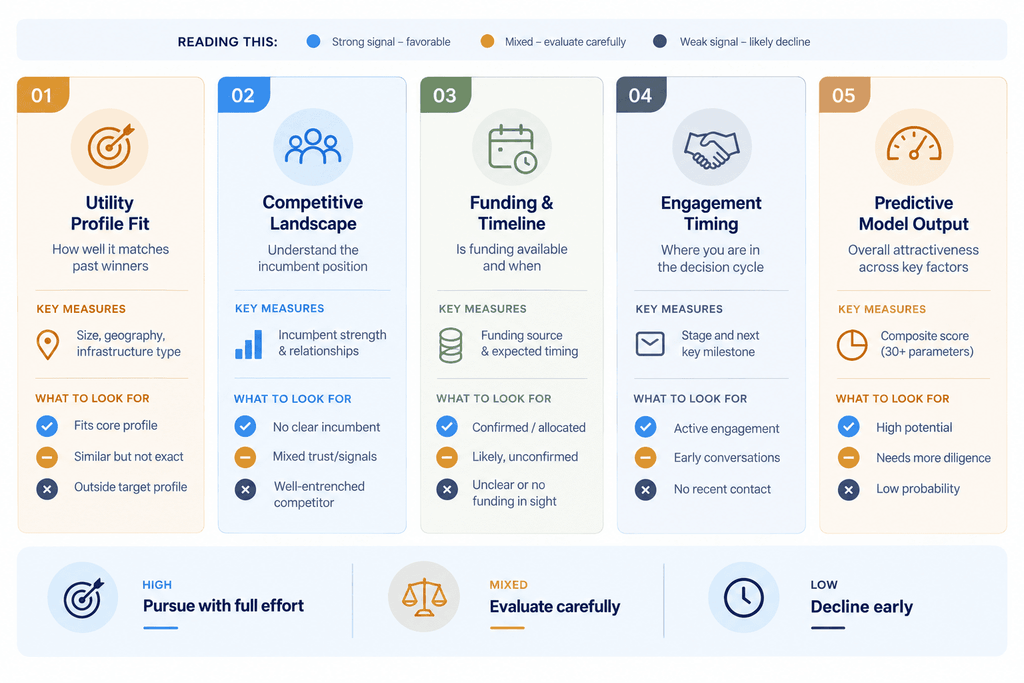
One infrastructure supplier in our case study built a qualification model analyzing over 30 parameters per opportunity. Deals scoring below a certain threshold were declined early, regardless of superficial appeal.
Why Discipline Beats Volume
Rigorous qualification requires discipline that goes against instinct. The instinct is always to pursue, to never leave an opportunity on the table or to never let go of anything without giving it a shot, but it is pertinent that you remember that every pursuit has a cost. Time, attention,technical resources, proposal effort. When those costs go into a deal you were unlikely to win, you’re not losing out on a deal but devoting your resources to a void that can yield nothing.
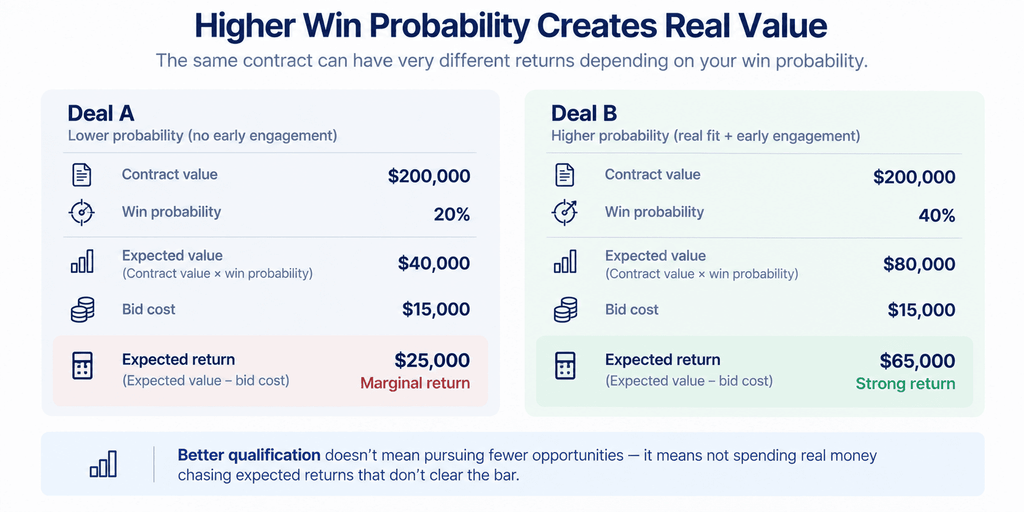
The math makes this concrete: a $200,000 contract pursued at a 20% win probability has an expected value of $40,000 if the bid itself costs $15,000 to prepare, that’s a marginal return at best. The same contract pursued with a genuine 40% win probability, the kind that comes from real fit and early engagement, doubles the expected value to $80,000 against the same cost. Qualification isn’t about pursuing fewer deals; it’s about not spending real money chasing expected returns that don’t clear the bar.
In 2023, 43% of B2B sales leaders reported longer sales cycles, while 44% said more opportunities were being lost to “no decision.” In an environment where deals take longer and uncertainty is higher, qualifying opportunities rigorously before investing significant resources becomes increasingly important.
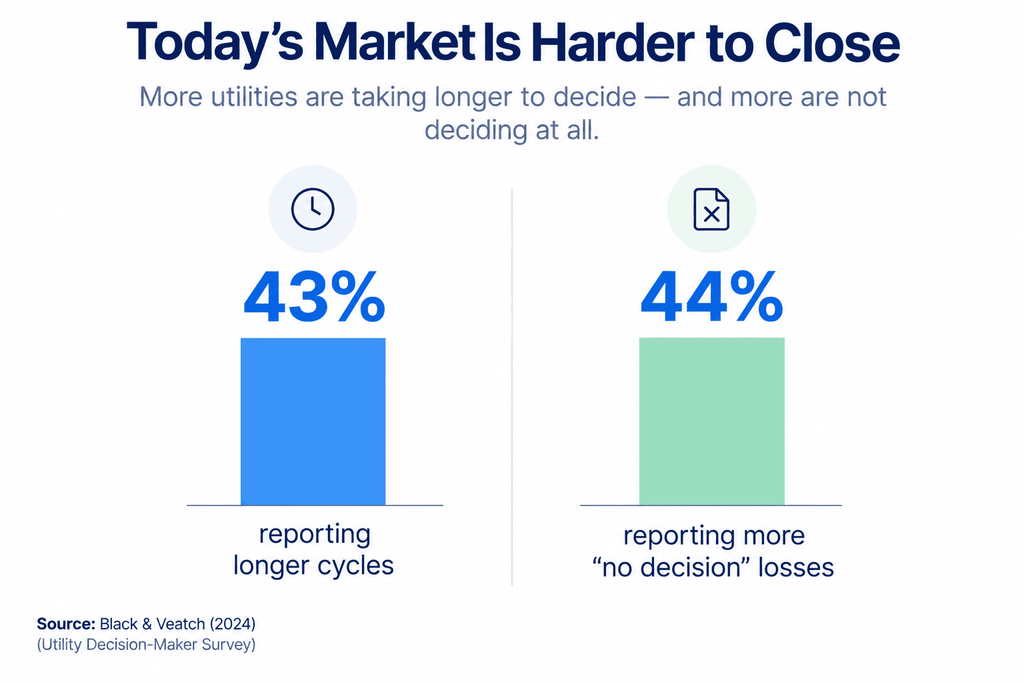
Intelligent qualification is a direct response to that reality because when you are unable to afford deals that stall or collapse after months of investment, you need a disciplined process for deciding which deals deserve that investment in the first place.
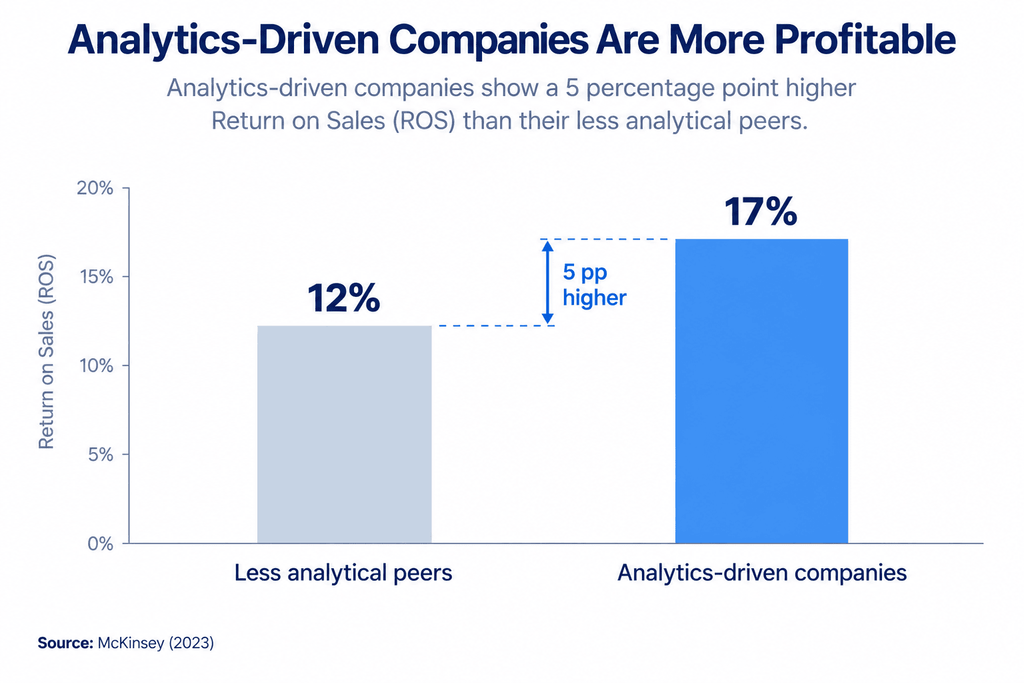
The companies investing in advanced analytics achieved up to 5 percentage points higher return on sales than less analytical peers. That’s what smarter resource allocation compounding over time brings in.
There are two ways to build a sales pipeline in the water sector. The first is to pursue every RFP, every project and every utility that appears remotely relevant. It feels productive because the pipeline gets bigger. The second is far less obvious: qualify opportunities ruthlessly before investing a single hour. The companies with the highest win rates almost always choose the second approach.
Want to know if you can win the next RFP you are targeting before the bid? Check your fitcheck score.